The best insulation software in 2026

The short version
- Best overall for insulation
- Jobber — Area-based line items, deposits and multi-day scheduling, at $49/mo plus $29 seats.
- Best cheap option
- QuoteIQ — $29.99/mo, with satellite measurement giving you a starting area before you drive out.
- Best for selling R-value up
- Housecall Pro — The Max proposal tool presents tiers, which is how insulation upgrades get sold.
Who this is for
One to four installers doing attic, wall and crawlspace insulation — blown-in, batts, occasionally spray foam. Residential retrofits and some new construction. Jobs run a day or two, and you buy the material before you install it.
Insulation quotes are area times R-value plus prep, and the prep is where the variance lives: removing old material, air sealing, dealing with vermiculite or rodent damage. Software’s job is to make those visible as priced choices.
The comparison
| Tool | Starts at | Users included | Best for | Verdict |
|---|---|---|---|---|
| Jobber | $49/mo | 1 | One to four installers | Area line items, deposits, multi-day jobs |
| QuoteIQ | $29.99/mo | 1 | Solo installers | Cheapest; satellite area measurement |
| Housecall Pro | $79/mo | 1 | Five or more | Proposal tool for R-value tiers |
| ServiceTitan | Quote only | Unlimited | Large service operations | Quote-only, service trades |
Jobber — best for an insulation contractor
$49/mo · One to four installersThe default field service platform for small home service businesses, and the one most operators compare everything else against.
Insulation fits Jobber’s shape well: a job that runs a day or two, carries material and labour lines, takes a deposit at approval and invoices on completion.
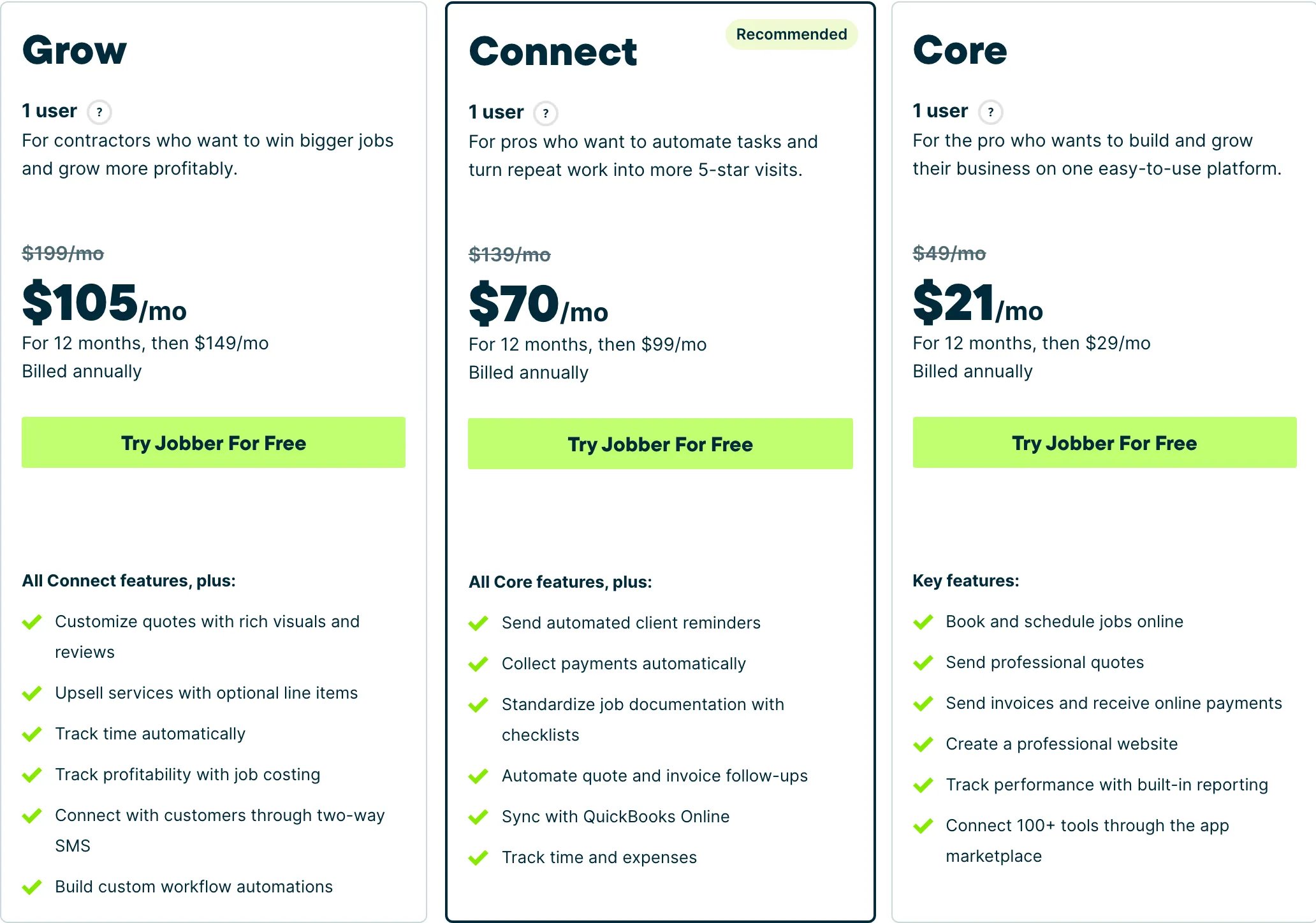
Optional line items on the Grow plan are the feature worth paying for here. Present R-38 and R-49 as choices, with air sealing and old-material removal as tickable extras, and the customer selects their own upgrade rather than negotiating your total down.
Photos attach to the job, which matters because most utility rebate submissions want before-and-after evidence and because attic conditions are worth documenting before you touch anything.
Core is $49/mo plus $29 per seat; optional line items are Grow at $199.
What it does well
- The most polished product in the category. Onboarding is fast and the mobile app is the one crews complain about least.
- Client-facing experience — booking page, quote approvals, payment — is a step above everything cheaper.
- Deepest integration list, so it fits whatever you already run the books in.
What it does badly
- The advertised entry price is one user. Seats are $29/mo each on every tier, so a three-person crew on Core is $107/mo, not $49.
- Automation that most operators consider essential — reminders, follow-ups — is Connect and up, a 2.8x jump from Core.
- Prepaid annual pricing is what the marketing quotes; the no-commitment monthly number is meaningfully higher.
Who it fits: One person to a mid-size crew. The Core tier is genuinely usable solo; the useful automation starts at Connect.
QuoteIQ — best cheap option
$29.99/mo · Solo installersField service software built for exterior cleaning and outdoor home service crews, with property measurement baked into the quote.
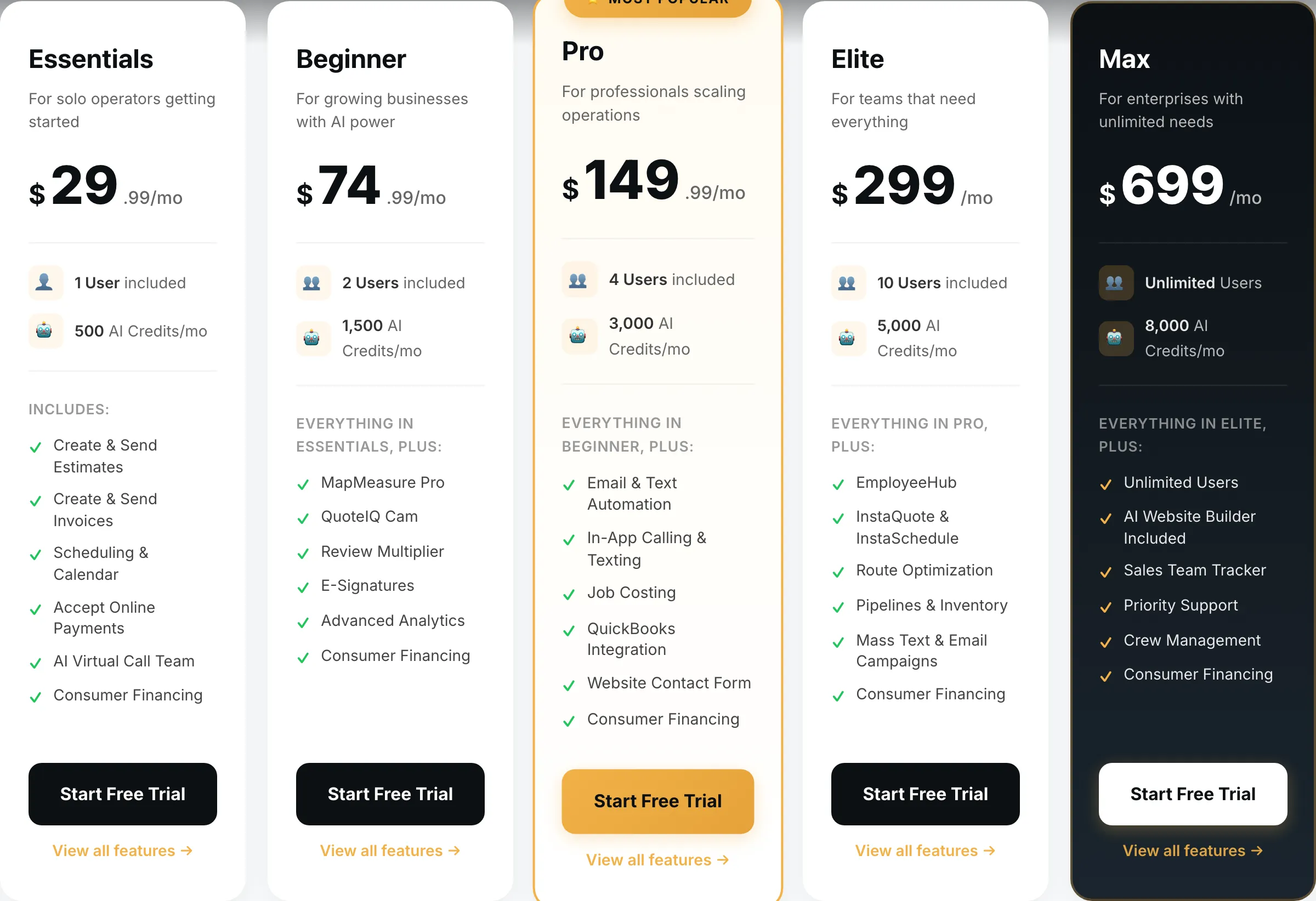
$29.99/mo, and MapMeasure Pro is useful here: a building footprint off satellite imagery gives you a workable attic area for a first quote without a site visit.
That is a real filter for a solo installer. Half the enquiries that arrive are price-shopping, and being able to give a defensible range over the phone saves the drive.
Consumer financing on every tier helps on whole-house retrofits, which land at the price point where a monthly figure closes the job.
No optional line items, so tiered R-value presentation is manual.
What it does well
- Cheapest real entry point of anything in this category — $29.99 gets a working quote-to-invoice loop, not a crippled trial tier.
- MapMeasure Pro measures a property off satellite imagery, which is the actual job on a lawn, driveway or roof quote.
- Every tier includes the features. No add-on menu bolted on at checkout.
What it does badly
- Smaller company than the incumbents. Fewer integrations, and you will occasionally be the person filing the bug.
- Built around exterior and outdoor trades. If you run commercial mechanical, this is the wrong shape.
- Seat counts are tight below Elite — a four-person crew is already on the $149.99 tier.
Who it fits: Solo operator to a four-person crew, mostly exterior cleaning and outdoor work.
Housecall Pro — best for tiered selling
$79/mo · Five or more installersJobber’s closest competitor, priced for teams rather than solos, with stronger dispatch and marketing tooling.
The Max plan’s sales proposal tool builds good-better-best presentations, and insulation maps onto that as cleanly as any trade: three R-values, three prices, one choice. Customers who would have haggled instead pick a tier.
Essentials at $189/mo includes five seats; Max at $329 includes eight and holds the proposal tool. Confirm add-on pricing in writing before signing annually.
Ignore Basic at $79 for one user.
What it does well
- Five seats included on Essentials is the best seat-per-dollar deal of the three once you are past two people.
- Dispatch and routing are stronger than Jobber’s at the equivalent tier.
- Recurring service plans on Max are genuinely good if you sell maintenance contracts.
What it does badly
- Worst entry price in the category: $79/mo for a single user, 60% more than Jobber Core for less.
- Extra seats on Essentials are $100/mo — the most expensive seat of any tool here.
- Add-on pricing is not published. You will get those numbers on a sales call, not off the website.
Who it fits: Two to eight people. The seat maths only starts working in your favour once you have a crew.
ServiceTitan — a different trade
Quote only · Large service operationsEnterprise field service management for multi-truck operations, sold through a sales process rather than a pricing page.
Named because a roundup omitting the market leader would read as an advertisement.
Built for dispatched service calls with price books, memberships and van inventory. Insulation is scheduled project work. No published pricing, an annual contract, a paid implementation.
What it does well
- Nothing else touches it for a large operation: reporting, payroll, inventory, call tracking, financing at the door.
- Built for a business where somebody’s full-time job is dispatch.
What it does badly
- No published pricing, an annual contract and an implementation fee. This is not a tool a solo operator buys.
- For a one to four person crew it is the wrong product at any price — you would use perhaps a tenth of it.
Who it fits: Ten trucks and up, with an office manager whose job includes running the software.
How we picked
Prices read off each vendor’s own pricing page on 31 August 2026, no-commitment monthly rate with seats added.
For insulation we weighted tiered and optional line items, because presenting R-value as a choice is the main lever on average job size; deposits, because the material spend precedes the revenue; and photo capture, because rebate submissions require it.
We treated utility rebate management as a gap across all four rather than a scoring category — none of them do it, and no general tool will.
We earn nothing from Jobber or ServiceTitan.
What we would do
Solo: QuoteIQ at $29.99 for the measurement and financing.
Two to four: Jobber — Grow at $199 if tiered R-value options would raise your average job, which for most contractors they will.
Five or more: Housecall Pro Max at $329 for the proposal tool.
Questions operators actually ask
What software do insulation contractors use?
Small contractors mostly use a general field service tool — Jobber or QuoteIQ — for quoting, scheduling and invoicing. The needs are area-based quoting, multi-day jobs and taking a deposit, because insulation is material-heavy and you buy before you install.
How should I quote insulation?
By square foot at a given R-value, with separate lines for removal of existing material, air sealing, and any attic prep. Presenting two or three R-value options rather than one number is the single easiest way to raise the average job in this trade.
Do these handle utility rebates?
No. None of the four manage rebate paperwork or utility programme submissions, and those vary by state and utility anyway. Keep that process separate; what software gives you is the job record and photos that most rebate submissions require.
Can I measure attic area without going up there?
Partly. QuoteIQ measures building footprint off satellite imagery, which gives you a usable starting area for an attic quote. You still need eyes on the space for depth of existing material, ventilation, access and condition — none of which are visible from above.
Is a deposit necessary?
Yes. Insulation is one of the more material-heavy trades on this site relative to job size, and fronting a truckload of material for a customer who pays in thirty days is how small contractors run out of cash while technically profitable.