Roofing profit margin: what good actually looks like

Roofing runs 25% to 40% gross margin on replacement, 45% to 65% on repair, and 4% to 12% net — thinner than most trades on this site, for two structural reasons.
Why roofing margin is structurally thin
Material is a large share of every replacement. Shingles, underlayment, flashing, ventilation and disposal on a $14,000 job might be $5,000 before a single hour of labour. That caps the percentage no matter how good your crew is.
Acquisition is expensive. Roofing customers buy once every twenty years, which means every job is a new customer. Marketing at 5% to 12% of revenue plus sales commission at 5% to 12% can consume a fifth of a contract before anyone climbs a ladder.
Neither of those is a problem to solve. They are conditions to price around.
Repair is your best margin, and it is usually neglected
A flashing repair might be $40 of material and two hours of skilled work. Gross margin of 55% or better, no sales commission, no marketing cost if it came from a past customer.
Roofing businesses that chase only replacements are chasing revenue. The ones that also service a repair book have a smoother year, better average margin, and a stream of qualified replacement leads from customers who already trust them.
Where it actually disappears
Unpriced decking. The single biggest in-job margin killer. Discovering rot with no agreed per-sheet rate means either absorbing it or having a confrontation on an open roof — and most roofers absorb some of it.
Callbacks. A leak return on a completed job is pure loss and it damages the referral that job should have generated.
Sales commission. Entirely legitimate, but it must be in your margin model. A 35% gross job with 10% commission is a 25% job.
Crew productivity variance. Squares per crew-day varies enormously between crews, and most roofers do not measure it. It is often the difference between a profitable month and a break-even one.
Waste. Over-ordering, damaged bundles, and material left on sites.
Gross versus net, properly
Gross margin: revenue less materials, crew labour with burden, equipment and disposal.
Net margin: after marketing, commission, insurance, vehicles, office, software and a real salary for yourself.
Roofers frequently quote a healthy gross figure and have no idea about net, because acquisition cost sits outside the job. It should not — track cost per acquired job and subtract it.
The measurement worth doing
Squares per crew-day, by crew. It is the productivity number roofing runs on and very few small roofers track it.
Two crews delivering 18 and 26 squares a day at the same wage cost are a 30% margin difference on identical work. You cannot fix what you do not measure, and this is the easiest measurement in the trade.
Making margin visible per job
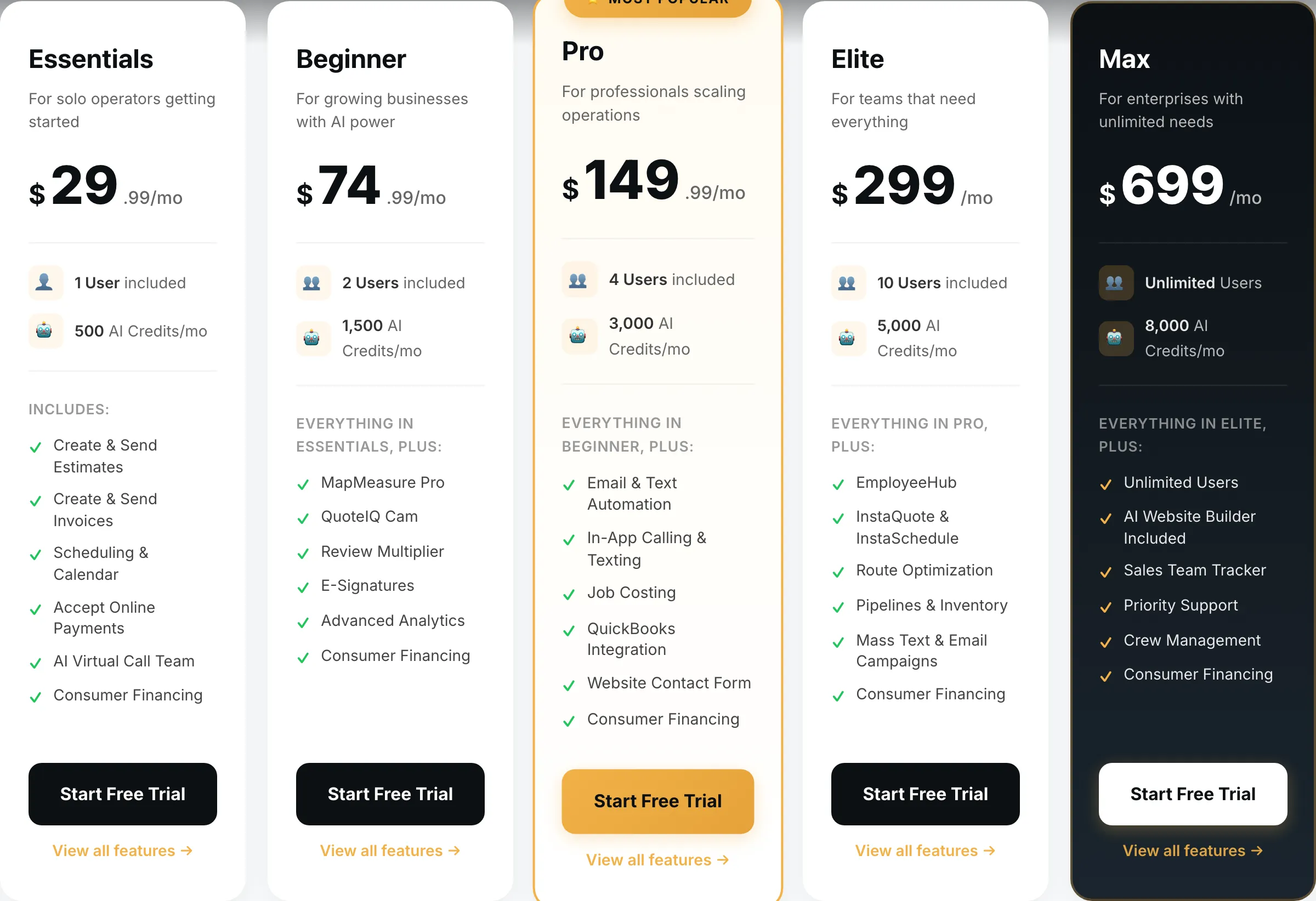
Jobber’s Grow plan at $199/mo adds job costing and automatic time tracking, which is how you get squares-per-crew-day without a clipboard. QuoteIQ includes job costing on Pro at $149.99/mo. Housecall Pro from $189/mo adds five seats and photo reporting.
For insurance and supplement-heavy work, none of these are the right tool — that is what AccuLynx and JobNimbus exist for, and their margin reporting is built around the claim rather than the job.
Questions operators actually ask
What is a good profit margin for a roofing company?
Gross margin of 25% to 40% on replacement and 45% to 65% on repair, with net margin of 4% to 12%. Roofing runs thinner than most home service trades because material is a large share of every job and marketing costs are high.
Why is repair margin so much better than replacement?
Because material content is small and skill content is high. A flashing repair might be $40 of material and two hours of expertise. A replacement is thousands of dollars of shingles. Roofers who chase only replacements are chasing revenue, not margin.
Where does roofing margin disappear?
Decking surprises that were never pre-priced, callbacks on leaks, sales commission, and the cost of acquiring the job. Marketing and commission on a rep-sold replacement can consume 15% of the contract before anyone climbs a ladder.
How much should I spend on marketing?
Most roofing businesses land between 5% and 12% of revenue, and storm-chasing operations far higher. Whatever the number, it belongs in your net margin calculation — a 35% gross margin with 15% acquisition cost is not a 35% business.
Does insurance work carry better margin?
Not inherently, and often worse once supplement work, documentation time and delayed payment are counted. It can produce volume, but treat it as a different business line with its own margin calculation rather than assuming it matches retail.