How to bid handyman jobs

Handyman work bids at $50 to $110 an hour — most solo operators between $65 and $85 — with a one-hour minimum of $75 to $175. Half days run $250 to $450.
Build a task price library
You do the same twenty jobs repeatedly. Price each once, properly, and every bid afterwards is selection rather than estimation.
(Typical time × your rate) + materials with markup = task price.
Rehang and adjust an interior door:
- 1.0 hour × $75 = $75
- Hinges and screws: $12 × 1.2 = $14
- Task price: $89
Do that for door rehangs, tap swaps, drywall patches, blind fittings, shelf installs, toilet replacements, light fittings, spindle repairs. Twenty tasks covers most of what you do, and quoting becomes a two-minute job instead of a twenty-minute one.
The customer also prefers it. A task price removes their uncertainty; an hourly estimate transfers it to them.
Price a handyman job
Your numbers, the formula above. Nothing is sent anywhere — this runs in your browser.
$225 base (3 hours × $75)
This is a starting number, not a bid. Walk the property before you send it.
The minimum is not optional
Handyman economics are dominated by travel and setup, not by the work. A twenty-minute tap washer twenty-five minutes away costs you nearly an hour of the day, plus fuel, plus the slot it occupied.
One-hour minimum, stated on every bid, applied every time. Operators who apply it quietly get complaints; operators who show it on the quote almost never do.
Time blocks for vague lists
When a customer hands you eleven unrelated small things, do not try to estimate eleven unrelated small things. Quote a block:
Half day (up to 4 working hours) — $340. Covers as many of the listed items as time allows, worked in your order of priority.
It is honest about the uncertainty, it removes your estimating risk entirely, and customers accept it more readily than a long speculative itemisation.
Materials and markup
At cost plus 10% to 30%, stated on the bid. It pays for the merchant trip, the sourcing and the stock you carry so the customer does not have to.
Say it explicitly. Hidden markup is what prompts customers to start buying their own materials, which slows every job you do for them afterwards and shifts the blame for wrong parts onto you.
What changes a handyman bid
Access and parking. City apartments with no parking and a lift are slower.
Customer-supplied materials. Fine, but do not warrant them and charge for a return visit if the part is wrong.
Old properties. Nothing is standard, nothing is square, everything takes longer.
Height. Anything needing more than a step ladder.
Licensing limits. Know what you cannot legally do in your state and say so up front rather than at the door.
The mistakes
No minimum. The single most common, and it quietly makes small jobs unprofitable.
Estimating from scratch every time. You have done this job before. Price it once.
Not numbering the tasks. Guarantees scope creep.
Hourly on jobs you know. Punishes you for being fast.
Not chasing quiet quotes. Handyman work is high-volume quoting; most lost jobs went silent rather than said no.
Quoting faster and chasing automatically
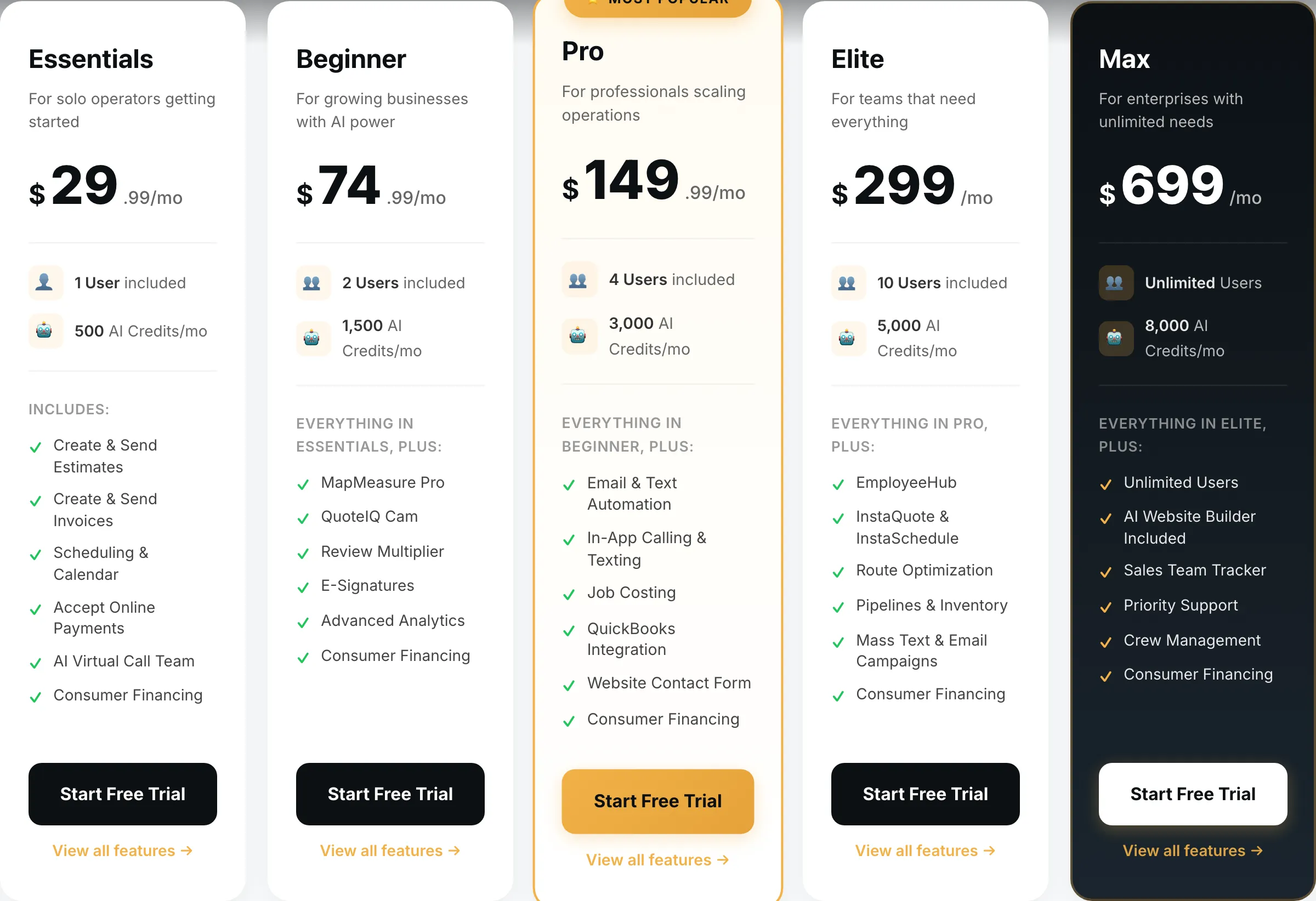
QuoteIQ at $29.99/mo is the cheapest way to build a saved task library and quote from the driveway. Jobber at $49/mo adds automated quote follow-ups on its Connect tier — at fifteen quotes a week, recovering one extra job a month pays for the upgrade several times over. Housecall Pro adds a flat-rate price book at $189/mo once several people are quoting for you.
Questions operators actually ask
How much should a handyman charge per hour?
$50 to $110 an hour, with most solo operators between $65 and $85. Licensed and insured operators sit at the upper end. That is a charge rate, not take-home — van, tools, insurance, unbillable travel and admin come out first.
Should I bid hourly or per task?
Per task for anything you have done ten times, hourly for genuine unknowns. Customers prefer task pricing because it removes their risk, and you can offer it confidently on repeat work because you know the time better than they do.
What minimum should I set?
One hour, at $75 to $175. Handyman work is dominated by travel and setup, and a twenty-minute job across town costs you the same drive as a full morning. The minimum is what makes small jobs viable rather than charitable.
How do I bid a long list of small jobs?
Quote a time block rather than the individual tasks. 'Half day, up to 4 working hours, $X, covering as many listed items as time allows in your priority order.' It removes your estimating risk and customers accept it readily.
How do I stop scope creep?
Number the tasks in the bid and add a line stating that unlisted work is quoted separately. It is not unfriendly — it is what lets you say yes to 'while you're here' and charge for it.